Benzoic Acid
Food-grade preservative and pharmaceutical-grade chemical intermediate
About Benzoic Acid
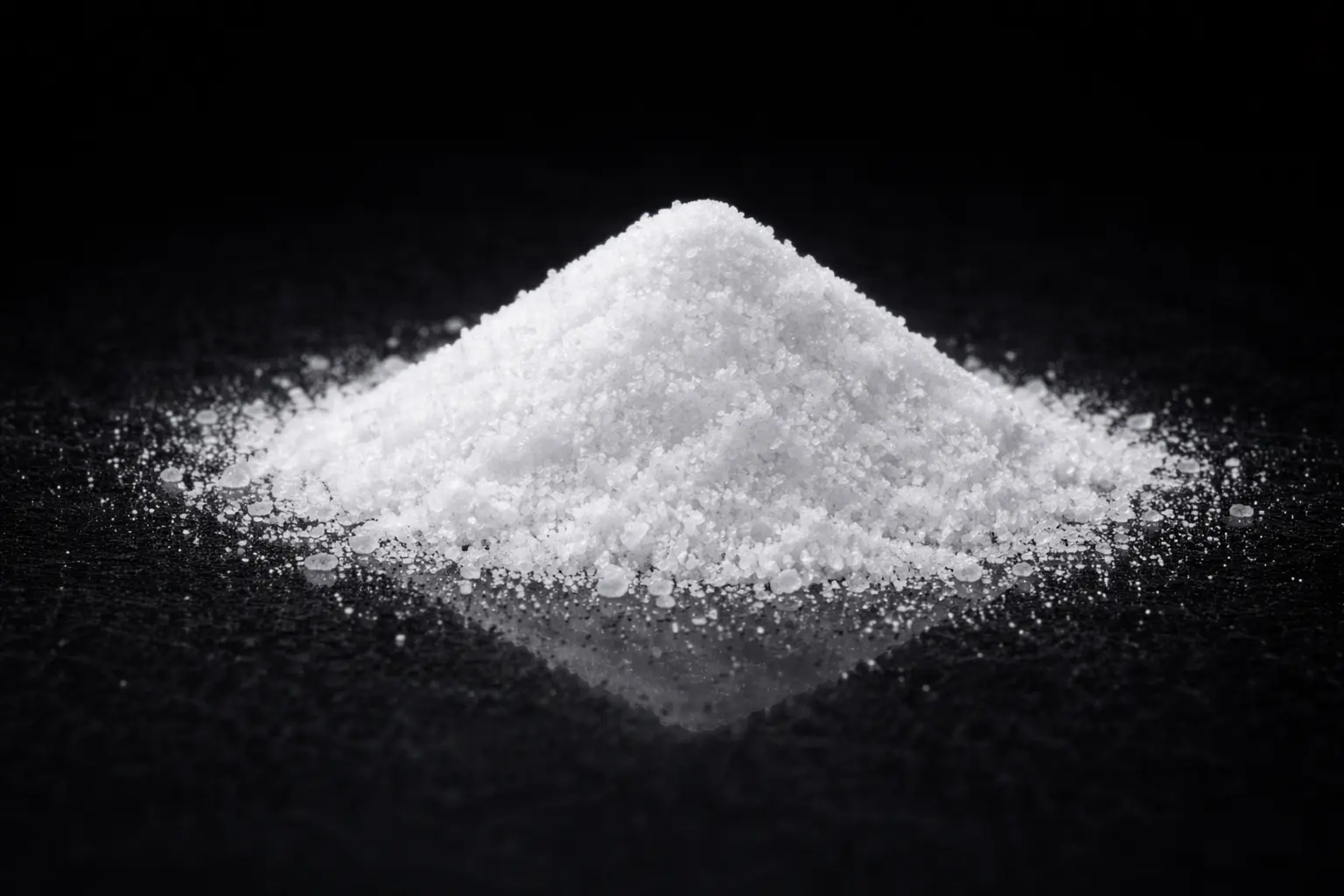
Benzoic Acid (C₆H₅COOH, CAS 65-85-0) is the simplest aromatic carboxylic acid — a white crystalline solid with a faint characteristic odour. First Chemicals supplies both food-grade (E210, compliant with FCC, BP, and EP specifications) and technical-grade variants. Food-grade benzoic acid is approved as a preservative in acidic foods and beverages (pH < 4.5) by FSSAI, FDA (21 CFR 184.1021), and the EU (E210), where it inhibits the growth of mould, yeast, and bacteria at concentrations of 0.05–0.1%. Technical-grade benzoic acid serves as a key intermediate for the manufacture of sodium benzoate, benzyl benzoate, benzaldehyde, benzoyl chloride, and phenol. It is also used as an end-cap and chain-stopper in nylon and alkyd resin production. All our food-grade benzoic acid is sourced from manufacturers with HACCP certification.
Key Applications
- Food and beverage preservation — acidic drinks, condiments, pickles (E210 / INS 210)
- Sodium benzoate production (most widely used food preservative)
- Pharmaceutical intermediates — benzyl benzoate (antiparasitic) and benzocaine
- Plasticiser and chain terminator in alkyd resins and nylon
- Benzoyl chloride and benzaldehyde synthesis
- Phenol production via catalytic decarboxylation
Typical Specifications
* Specifications are typical values. Actual COA provided with each shipment.
Frequently Asked Questions
What is Benzoic Acid used for in food?
Benzoic Acid (E210 / INS 210) is an approved food preservative that inhibits the growth of mould, yeast, and some bacteria in acidic foods (pH < 4.5). It is used in carbonated drinks, fruit juices, pickles, condiments, jams, and margarine at concentrations typically between 0.05% and 0.1% (500–1000 mg/kg), within limits set by FSSAI, EU, and FDA regulations.
What is the difference between food-grade and technical-grade Benzoic Acid?
Food-grade benzoic acid meets FCC (Food Chemicals Codex), BP (British Pharmacopoeia), and EP (European Pharmacopoeia) specifications — including strict limits on heavy metals (≤10 ppm Pb), chlorinated compounds, and appearance. Technical grade may have relaxed limits on some impurities and is suitable for industrial applications like sodium benzoate production, resin synthesis, and chemical intermediates, but not for direct food or pharmaceutical use.
Is Benzoic Acid safe?
Yes, at approved food-use concentrations. Benzoic acid and its salt sodium benzoate are GRAS (Generally Recognised As Safe) by the FDA and approved by FSSAI, EFSA, and Codex Alimentarius. However, in the presence of ascorbic acid (vitamin C) and certain metal ions, sodium benzoate can form benzene — so formulation care is needed in vitamin C-containing beverages.
What standard does First Chemicals' food-grade Benzoic Acid meet?
Our food-grade benzoic acid conforms to FCC (8th Edition), BP 2023, and is suitable for applications requiring EP compliance. Purity is ≥99.5%, melting point 121–123°C, heavy metals ≤10 ppm (as Pb), and residue on ignition ≤0.05%. HACCP-certified source facilities.
Where does First Chemicals source Benzoic Acid from?
We source benzoic acid from verified manufacturers in China, which accounts for the majority of global benzoic acid production. All suppliers are audited for quality management systems, and we require batch COA and MSDS with every shipment.