GGBFS
Ground Granulated Blast Furnace Slag for high-durability concrete
Supply Origins
Packaging
Jumbo Bags (1MT)
Related Products
About GGBFS
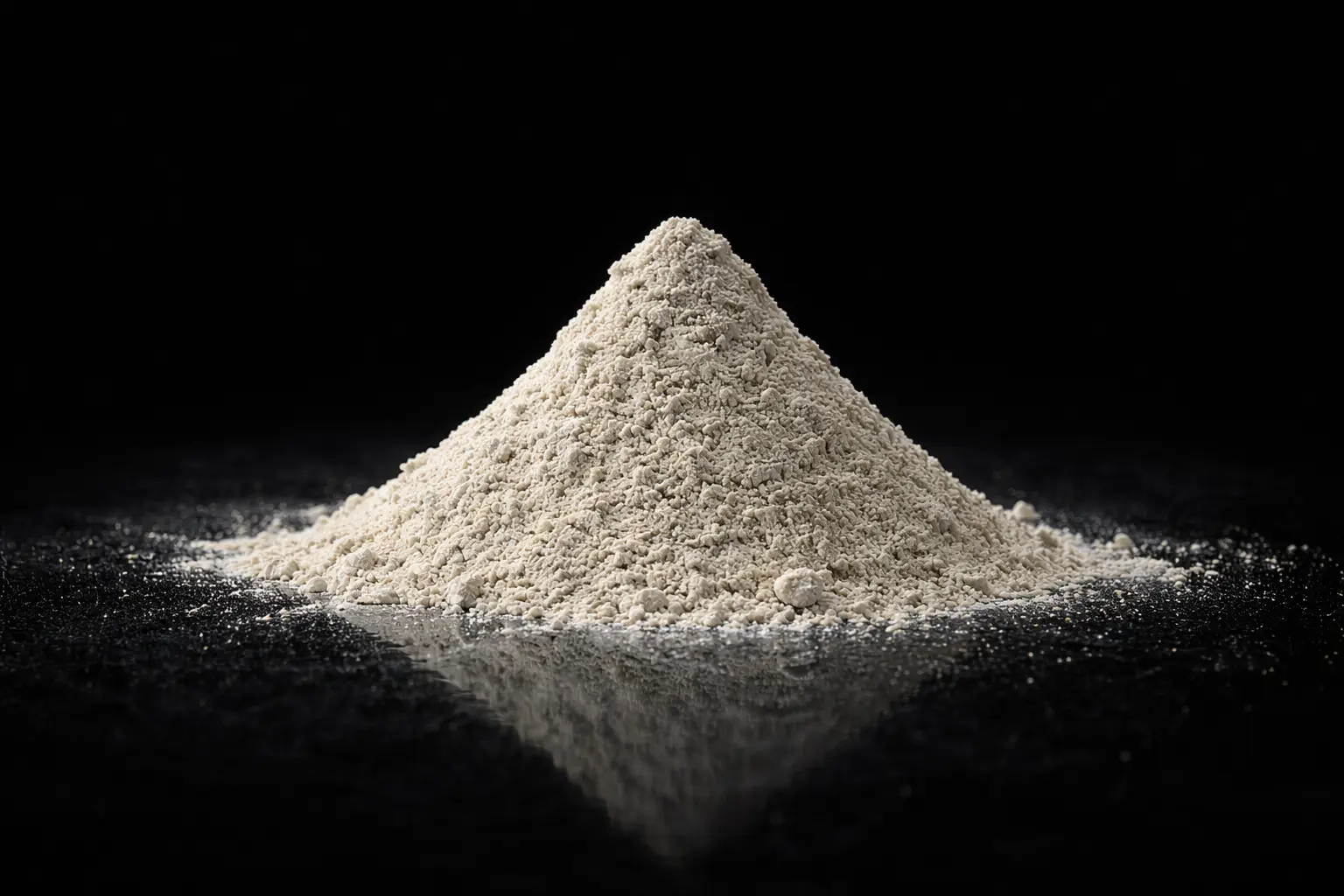
Ground Granulated Blast Furnace Slag (GGBFS, also known as slag cement or Grade 120 slag) is a latent hydraulic binder produced by quenching molten iron blast furnace slag in water, then grinding it to cement fineness. Conforming to IS 12089: 1987 and EN 15167, GGBFS is activated by the alkalis released from Portland cement hydration and develops hydraulic strength comparable to — and in the long term exceeding — OPC. GGBFS concrete offers dramatically reduced chloride permeability (critical for marine, coastal, and bridge structures), improved resistance to sulphate attack, and lower heat of hydration for mass concrete pours. As a by-product of iron manufacturing, GGBFS also carries a significantly lower embodied carbon than clinker. First Chemicals supplies GGBFS from Indian steel plants with consistent Blaine fineness and glass content.
Key Applications
- High-performance and high-durability concrete (HPC/HDC)
- Marine, coastal, and offshore concrete structures
- Mass concrete — raft foundations, dams, bridge piers
- Portland Slag Cement (PSC) manufacturing
- Precast concrete and pipe manufacturing
- Ground improvement, grouting, and cemented backfill
Typical Specifications
* Specifications are typical values. Actual COA provided with each shipment.
Frequently Asked Questions
What is GGBFS and how does it work in concrete?
GGBFS (Ground Granulated Blast Furnace Slag) is a latent hydraulic material — it has cementitious potential but requires an activator. In concrete, alkalis from Portland cement hydration activate the glassy slag particles, which then react with water to form calcium silicate hydrate (C-S-H), the same compound responsible for concrete strength. This reaction continues over months, resulting in long-term strength gains and very dense, low-permeability concrete.
What is the typical replacement level of GGBFS for cement?
GGBFS is typically used at 30–70% replacement of Portland cement by weight. For marine and aggressive environments, 50–70% is common (IS 456 Table 3). For mass concrete, up to 70% is used to reduce heat of hydration. The blend is often specified as CEM III or PSC.
What standard does First Chemicals' GGBFS conform to?
Our GGBFS conforms to IS 12089: 1987 (Grade 120) and is also suitable for EN 15167-1 applications. Each consignment comes with a COA covering Blaine fineness, glass content, activity index (7d and 28d), MgO, and moisture.
What is the difference between GGBFS and fly ash?
Both are supplementary cementitious materials (SCMs) but differ in reactivity and origin. GGBFS is a latent hydraulic binder (stronger cementitious activity, can replace up to 70% of cement) sourced from steel blast furnaces. Fly ash is a pozzolan (lower reactivity, 20–35% replacement typical) from coal power plants. GGBFS gives better chloride resistance and higher long-term strength; fly ash gives better workability and lower cost.
What packaging and minimum order does First Chemicals offer for GGBFS?
We supply GGBFS in 1MT FIBC (jumbo) bags. Minimum orders are typically one full truck load (20–25 MT). Bulk powder tanker delivery can be arranged for large infrastructure projects. Contact us for project-specific volumes and pricing.